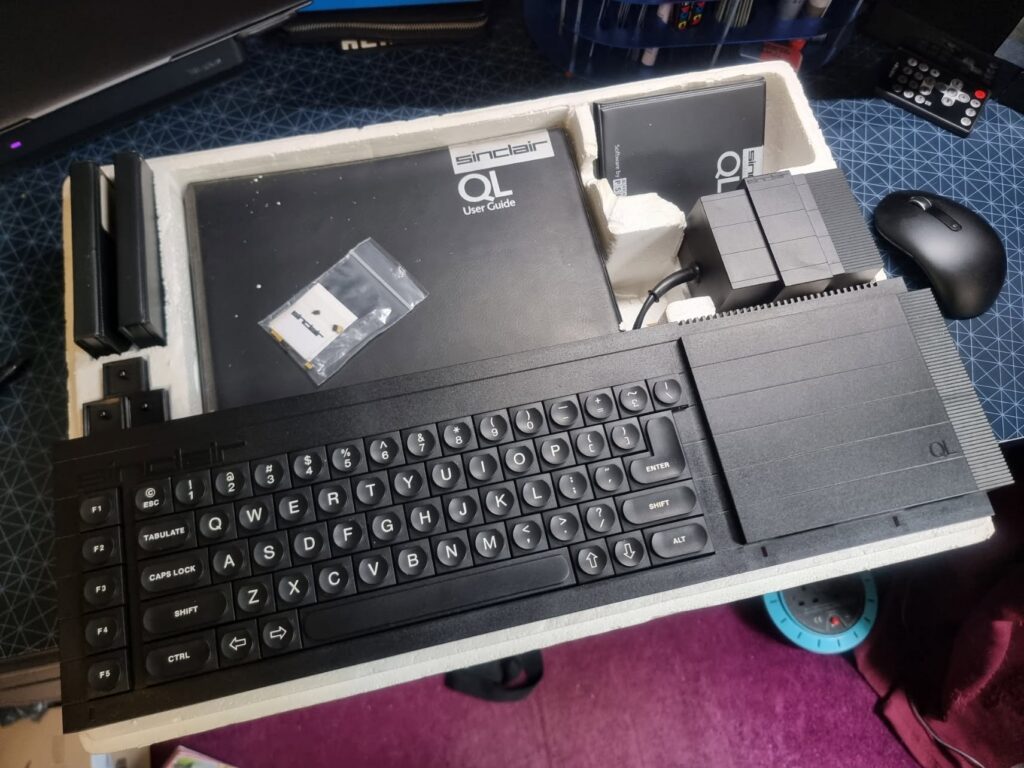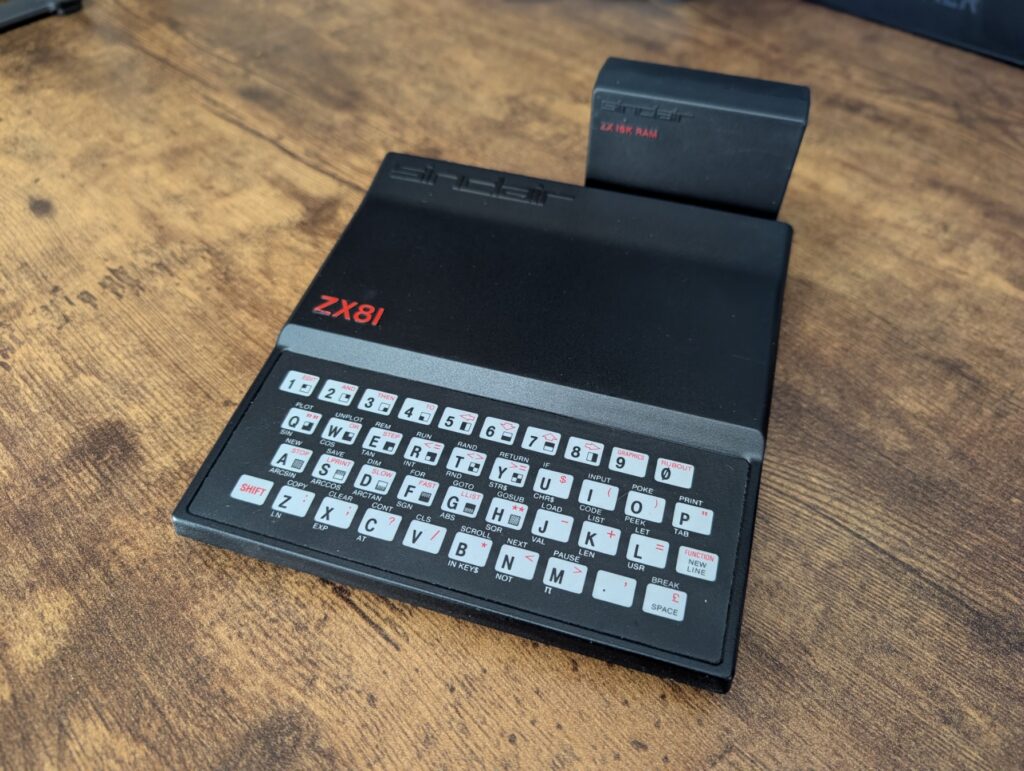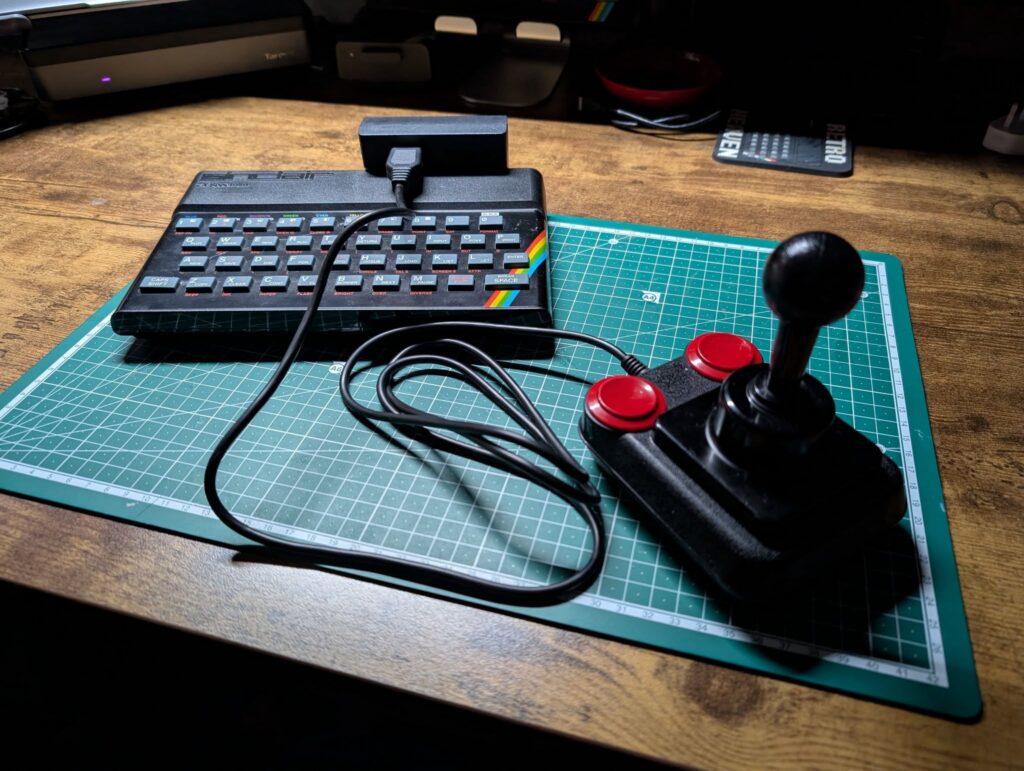
I’m not entirely sure whether this counts as a midlife crisis or just a nostalgic detour — but here we are.
As a kid, I had one of these glorious little machines, and it’s fair to say it’s what set me on the path to everything I do today. The ZX Spectrum wasn’t just a computer; it was a gateway to imagination, problem‑solving, and the thrill of making something come alive on screen with a few lines of BASIC.
The Spark Rekindled
Between the COVID‑19 lockdowns — those strange, stop‑start months when charity shops briefly reopened and we all tried to reclaim a bit of normality — I spotted one sitting quietly on a shelf: a humble 48K Spectrum, looking every bit the relic of British computing history. I stood there for far too long, debating whether to buy it. In the end, I walked away.
But that moment stuck with me. I began researching how people were getting these old machines working with modern TVs and monitors, and what I discovered was incredible — a thriving community of enthusiasts who not only restore these systems but actively future‑proof them. HDMI mods, composite upgrades, replacement membranes, new power supplies — the works.
That was it. I was hooked again!
Not One, But Two
So, guess what? I didn’t just buy one. I bought two, a 48k ZX Spectrum Rubber Keyed Wonder and a Spectrum +2 128K, complete with its built‑in tape deck, currently being restored by Andrew Pope of PopeyMon Games and Fun. It’s a beautiful piece of engineering — the kind of machine that makes you appreciate how far we’ve come, yet how much charm those early designs still hold.
Back to Jetpack and BASIC
Now, instead of playing Jetpack on an emulator, I can play it the way it was meant to be played — on a real Spectrum, with that unmistakable “dead‑flesh” rubber keyboard.
There’s something deeply satisfying about typing in those old magazine listings from Your Computer and Your Sinclair, watching the code come to life line by line. It’s slow, tactile, and oddly meditative — a reminder of when computing was personal, hands‑on, and full of discovery.
Final Thoughts
Maybe this is my midlife crisis. Or maybe it’s just a reconnection with the machine that started it all. Either way, I’m having a blast — soldering, coding, and reliving the joy of 8‑bit simplicity.
The ZX Spectrum isn’t just nostalgia; it’s a reminder that creativity doesn’t need cutting‑edge hardware. Sometimes, all you need is a rubber keyboard, a blinking cursor, and a little bit of curiosity.