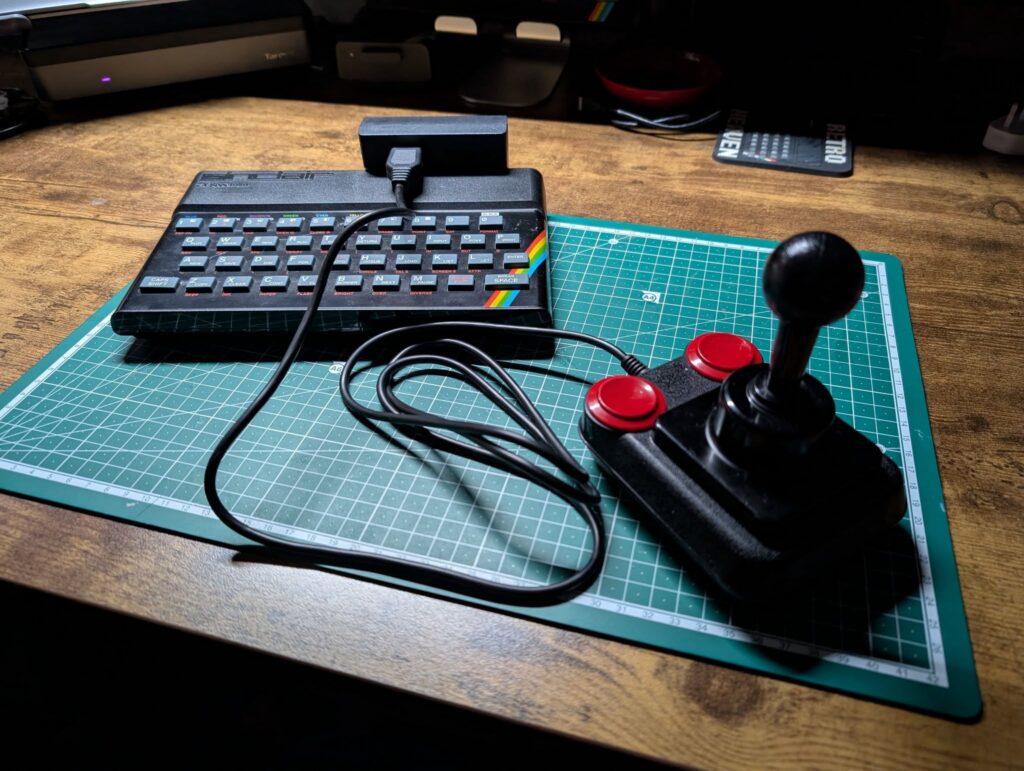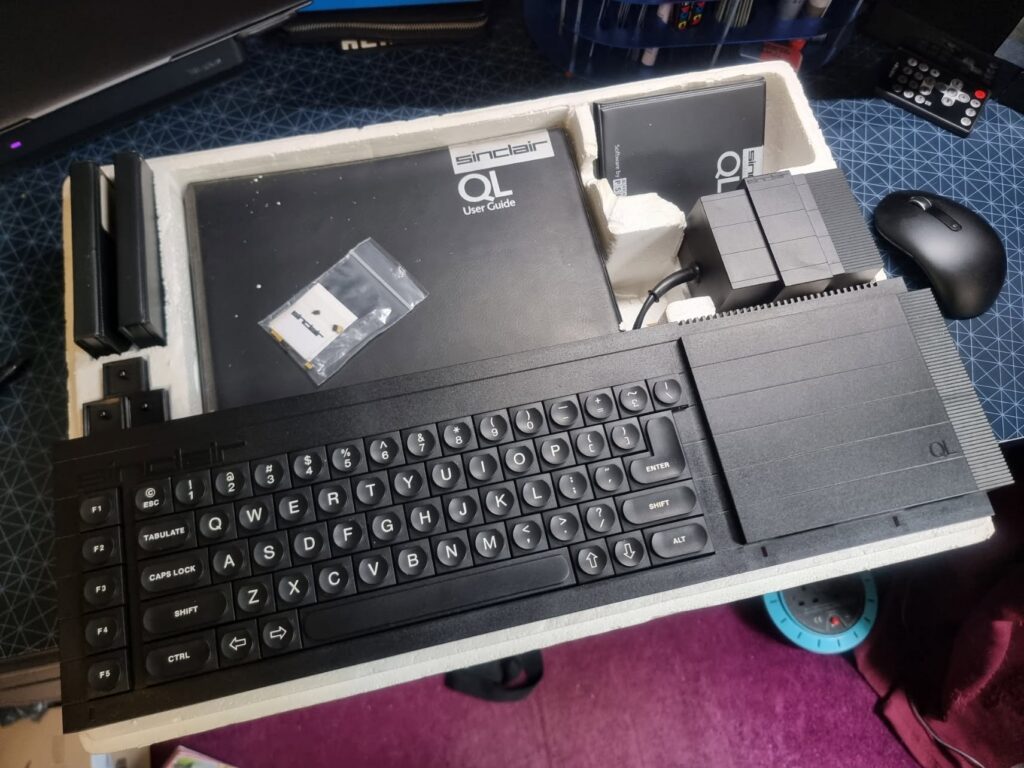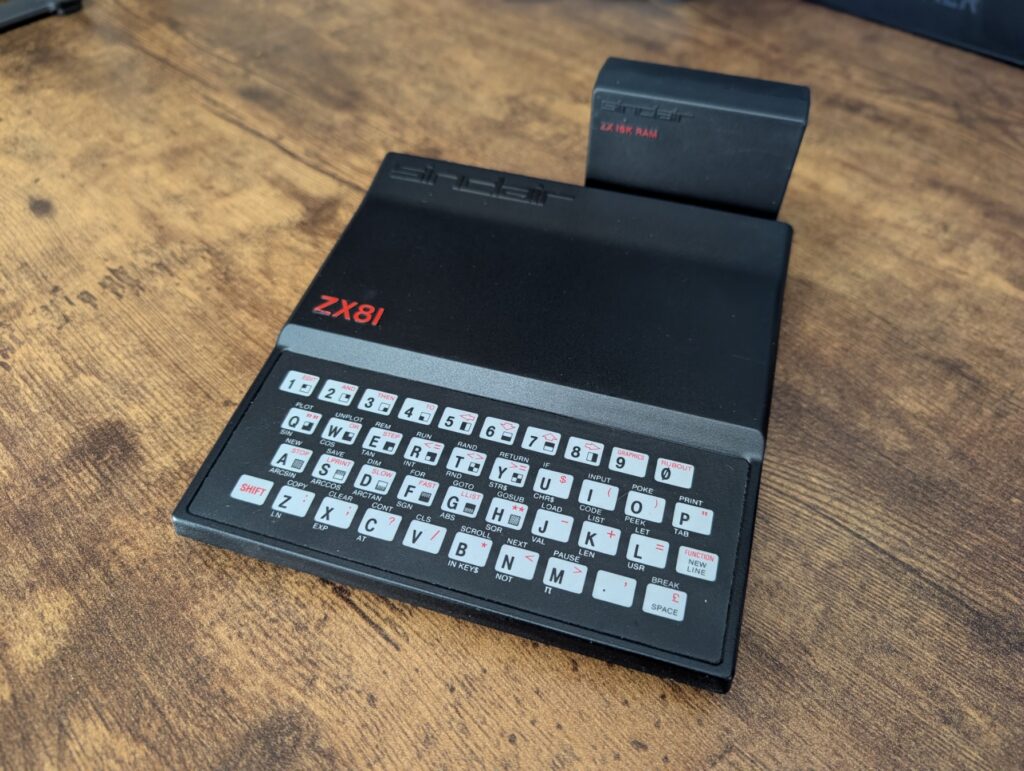
The ZX81 was the very first computer I ever owned, way back in 1982 — some 44 years ago. It’s strange to think how that tiny black wedge kicked off a lifelong fascination with computers, electronics, and eventually the restoration work I do today. The machine I have on the bench here isn’t my original one; that long since gave up the ghost, well before I ever thought about repairing or restoring vintage hardware. But this particular ZX81 is a survivor. It’s still in its original condition, no composite mods, no internal upgrades, nothing — and yet it still runs.
For anyone who didn’t grow up with one, the ZX81 was a marvel of minimalism. Designed by Sir Clive Sinclair and released in 1981, it was intended to be a truly affordable home computer at a time when most machines cost several hundred pounds. Sinclair’s team engineered the ZX81 to be as cheap as possible: a single‑board design, a membrane keyboard, and a custom chip (the infamous ULA) that handled most of the heavy lifting. The result was a computer that retailed for just £49.95 in kit form or £69.95 assembled — an absolute bargain that helped bring computing into ordinary homes across the UK.
A Whole Kilobyte of Memory
The ZX81 shipped with a whopping 1K of RAM. Yes, one kilobyte. Even writing that number feels surreal now. To get anything meaningful out of the machine, you needed the 16K RAM pack — the iconic black expansion block that hung precariously off the back of the computer. With it, you could load larger programs, type in listings from magazines, and play the more ambitious games of the era. Alongside the RAM pack, a cassette recorder was essential for loading and saving software. That was your entire ecosystem: computer, RAM pack, tape recorder, and a lot of patience.
Loading Games: A Test of Faith
Loading games on the ZX81 was always a bit of a lottery. Unlike the ZX Spectrum, which rewarded you with colourful loading bars and a sense of progress, the ZX81 gave you nothing but black‑and‑white stripes. You’d sit there, listening to the screeching tones from the tape, hoping the machine was actually doing something. Sometimes it did. Sometimes it didn’t. And sometimes it almost did, only for the RAM pack to wobble and reset the entire computer.
Taming the RAM Pack Wobble
That RAM pack wobble became part of ZX81 folklore. The expansion was tall, heavy, and plugged into a tiny edge connector never designed to support it. The slightest vibration — a knock on the desk, someone walking across the room, even a heavy sigh — could cause the machine to restart, wiping whatever you were doing. If you were halfway through typing in The Valley of Adventure from a magazine, losing your work was soul‑destroying.
Because of this, ZX81 owners became masters of improvised engineering. Everyone had their own method of keeping the RAM pack steady:
- Blu Tack or Plasticine: Probably the most common solution. A blob of Blu Tack pressed between the RAM pack and the desk acted like a shock absorber. It wasn’t elegant, but it worked surprisingly well.
- A Stack of Books Behind the Machine: Many users simply propped the RAM pack against a paperback or two. The idea was to stop it leaning backwards and stressing the connector. It looked ridiculous, but it kept your game of 3D Monster Maze from vanishing mid‑load.
- Homemade Brackets and Wooden Blocks: Some people went full engineer and built little wooden supports or metal brackets to hold the RAM pack at the perfect angle. These were often cobbled together from whatever was lying around — bits of Meccano, scrap wood, even Lego.
- Elastic Bands Around the Computer: A less dignified but surprisingly effective method involved looping elastic bands around the ZX81 and the RAM pack to clamp them together. It made the whole setup look like a prototype bomb, but it kept the connection firm.
- Double‑Sided Tape or Velcro: A more permanent solution was sticking the RAM pack to the desk. This prevented movement entirely, though it also meant your ZX81 was effectively glued in place until you pried it free.
These fixes were never elegant, but they were part of the charm. Early home computing wasn’t just about typing code — it was about physically coaxing the machine into staying alive long enough to run it. The ZX81 demanded patience, creativity, and a bit of mechanical ingenuity, and that made it feel like you were truly working with the machine rather than simply using it.
Graphics, Sound, and That Keyboard
The ZX81’s graphics were extremely basic — mostly blocky characters and simple shapes. There was no sound hardware at all. Everything was silent, and then there was the keyboard: a flat membrane sheet with spongy, unresponsive keys. Typing on it felt like pressing on a damp piece of cardboard. But it had charm, and once you got used to its quirks, it became part of the ZX81 experience.
Despite Everything, I Loved It
For all its faults — the wobbling RAM pack, the silent operation, the primitive graphics, the temperamental loading — I absolutely loved this machine. It was my gateway into computing. It taught me patience, problem‑solving, and the joy of making something come alive on a screen with nothing but code. And even now, decades later, I still feel a real affection for the ZX81. It’s a reminder of where it all began.
Seeing this particular unit still running, untouched and original, brings back a lot of memories. It’s a testament to Sinclair’s quirky engineering and to the era when home computing was new, exciting, and full of possibility.