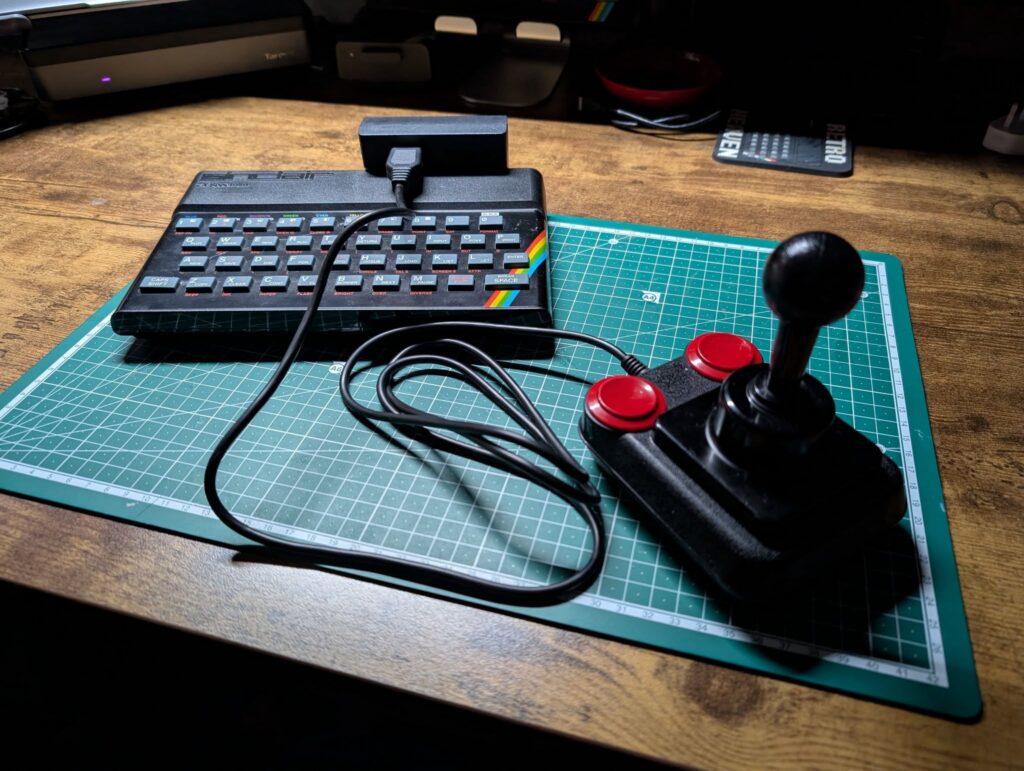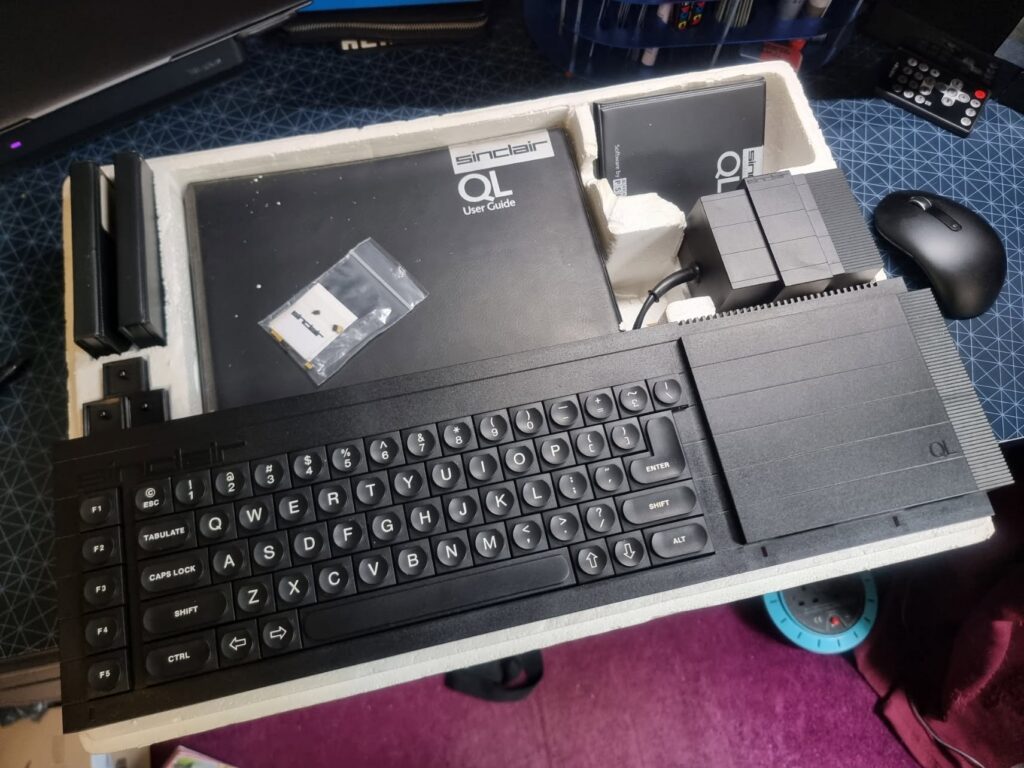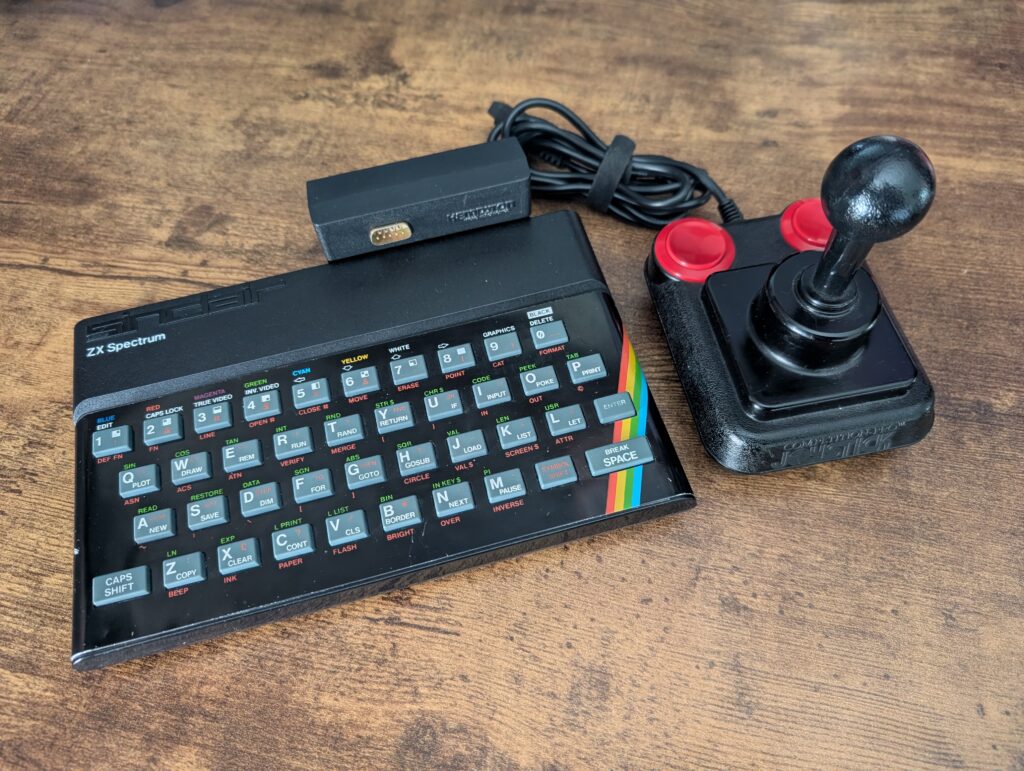
The ZX Spectrum wasn’t just a home computer — it was a cultural moment. For many of us growing up in the UK, it was the machine that taught us to code, introduced us to gaming, and sparked a lifelong fascination with technology. For me, it was all of that and something more personal: a surprise gift that arrived out of nowhere and changed my childhood.
A Lunchtime Surprise That Became a Lifelong Memory
I used to dash home from school for lunch, grab a sandwich, and disappear upstairs to squeeze in half an hour on my trusty ZX81 — usually 3D Monster Maze or The Valley of Adventure. One ordinary afternoon, my grandfather shouted me downstairs. After the usual “in a minute!”, I wandered into the living room…
There it was. A 48K ZX Spectrum, sitting on the dining table.
I hadn’t asked for one — I knew how expensive they were, and my grandparents were raising me on two pensions. But they’d gone out that morning and bought it anyway, probably imagining I’d use it for schoolwork. In truth, it got used for games and some programming — so yes, it did end up being educational after all.
That moment is burned into my memory. The Spectrum wasn’t just my next computer; it was a gift of possibility.
Sinclair’s Mission: Computing for Everyone
Clive Sinclair’s vision was bold: put a computer in every home, not just in schools, universities, or businesses. In the early 1980s, most home computers cost £300–£500 — far beyond what many families could afford. Sinclair wanted to break that barrier.
So when the ZX Spectrum launched in April 1982, priced at £125 for the 16K model and £175 for the 48K model, it undercut much of the competition and quickly became a bestseller, reaching one million units sold by December 1983. Achieving that price point required engineering compromises — clever ones that shaped the Spectrum’s personality.
Sinclair’s Unusual Cost‑Cutting: Faulty RAM as a Feature
Sinclair’s obsession with affordability led to one of the most unconventional engineering decisions in the Spectrum’s design: the use of faulty 64‑kilobit DRAM chips as the machine’s upper 32KB of RAM. Contemporary documentation confirms that the 32KB expansion in 48K Spectrums was built from eight defective 64Kb chips, each with only half of its memory working. Sinclair tested these chips, identified whether the usable portion was in the upper or lower half, and wired the board accordingly — a cost‑cutting strategy that allowed the company to buy otherwise discarded components at a steep discount.
This approach wasn’t without drawbacks. Early Spectrums using these salvaged chips were more prone to RAM‑related instability, a consequence noted in both repair histories and service documentation. Still, the strategy worked well enough to keep production costs low and retail prices competitive, helping Sinclair deliver a 48K machine at a price ordinary households could afford. Like the rubber keyboard, the ULA’s timing quirks, and the single‑channel beeper, Sinclair’s use of faulty RAM became another example of the company’s unconventional but effective engineering philosophy — one that helped bring computing to the masses.
The Clever Cost‑Cutting That Defined the Spectrum
The Rubber Membrane Keyboard
The Spectrum’s keyboard was both iconic and infamous, built around a cost‑saving design that used a flat membrane sheet with pressure pads beneath a rubber mat to simulate key feel, all topped with a thin metal faceplate held on with double‑sided tape. It was clever and inexpensive, but it came with quirks: the notorious “dead flesh” sensation made typing long BASIC listings a slog, membranes were prone to wearing out or cracking, and heat from the machine often caused the faceplate to curl or peel away — a common complaint among early owners. Despite these flaws, the keyboard became an unmistakable part of the Spectrum’s character: cheap, distinctive, and instantly recognisable.
The ULA Chip — Sinclair’s Secret Weapon
The ZX Spectrum, like its predecessor the ZX81, relied heavily on a custom Ferranti‑designed ULA (Uncommitted Logic Array), a single chip that replaced dozens of discrete components by handling video output, memory contention, timing, and keyboard scanning. This approach dramatically simplified the motherboard and kept manufacturing costs low, making Sinclair’s aggressive pricing possible. But the ULA also introduced quirks: whenever it accessed memory to refresh the display, the CPU had to pause, slowing certain operations, and its tightly bound video timing shaped how games scrolled, animated, and managed colour. Developers quickly adapted to these constraints — and in many cases even exploited the ULA’s predictable behaviour to squeeze out extra speed or create visual tricks that became part of the Spectrum’s distinctive character.
The Single‑Channel Beeper
Most home computers in 1982 shipped with dedicated multi‑channel sound chips, but the ZX Spectrum made do with a single on‑board beeper — one channel, no volume control, no envelopes, and certainly no polyphony. It was an extreme cost‑saving measure, yet developers coaxed astonishing results from this tiny speaker: pulse‑width modulation tricks allowed them to mimic multiple channels, rapid toggling produced drum‑like effects, and games such as Manic Miner even managed recognisable in‑game music. Some titles went further still, squeezing out crude but charming speech, as heard in Ghostbusters and Saboteur. What should have been a crippling limitation instead became a showcase of ingenuity, turning the humble beeper into a symbol of just how much creativity developers could wring from the Spectrum’s minimalist hardware.